2026 Top Packaging Automation Trends for Global Buyers

Time:2026-10-21 Author:Sienna
0%

Packaging automation is moving from isolated machines toward connected, flexible production systems. Global buyers now ask, “what are the latest trends in packaging automation” before comparing equipment, suppliers, or budgets. The question is practical. A high-speed line may look impressive, yet it can struggle with frequent product changes, unstable materials, or limited technical support.

Current developments include collaborative robots, artificial intelligence for inspection, digital twins, predictive maintenance, and smarter end-of-line systems. Cloud-based monitoring is also becoming more accessible. Operators can view downtime data from a tablet beside the conveyor. That detail matters. Small delays often reveal larger design problems.

Tom Egan, Vice President of Industry Services at PMMI, has stated, “Automation must solve a real production problem before it becomes a worthwhile investment.” His point remains relevant for international purchasing teams. Automation should improve safety, consistency, labor efficiency, and traceability. It should not simply add complexity.

This guide examines the 2026 packaging automation landscape through the needs of global buyers. It considers equipment integration, workforce skills, energy use, cybersecurity, compliance, and after-sales service. Supplier transparency matters, too. Buyers need clear specifications, realistic payback estimates, training plans, and accessible spare parts.

Some predictions will be wrong. Markets change quickly. A technology that performs well in a controlled demonstration may disappoint on a dusty factory floor. That gap deserves attention. Practical experience must balance optimistic forecasts.

The sections ahead connect emerging trends with purchasing decisions. They focus on reliable value, not fashionable terminology. For many companies, the best solution may be less dramatic than expected. That is still progress.
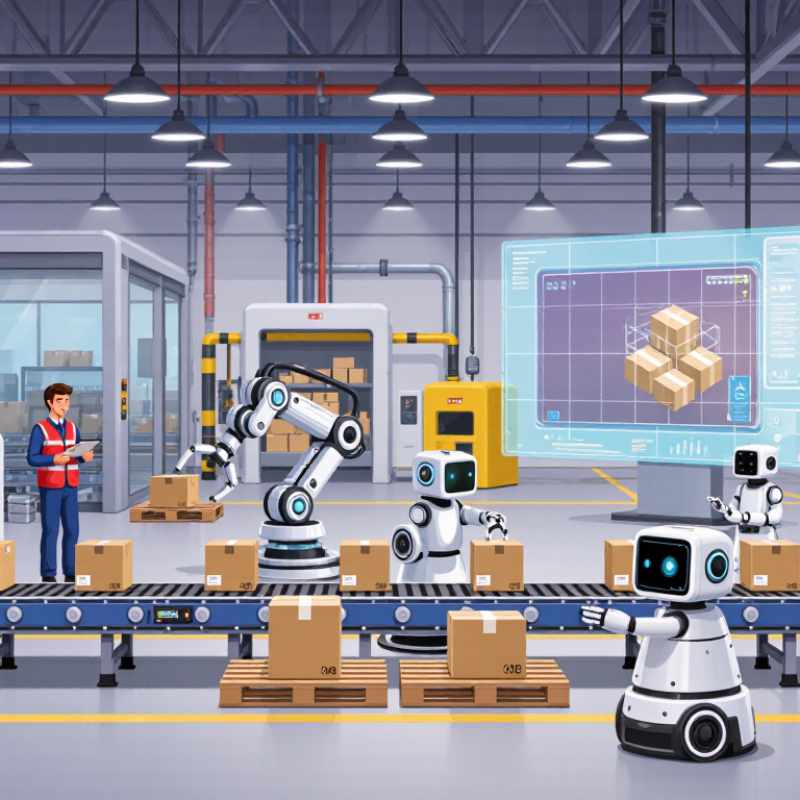
2026 Top Packaging Automation Trends for Global Buyers

Definition and Scope of Packaging Automation in 2026

Definition and Scope of Packaging Automation in 2026

Packaging automation means using machines, sensors, software, and controls to move, fill, seal, label, inspect, and palletize products. Its scope now reaches beyond individual machines. It includes connected lines, production data, remote monitoring, and changeover management. For global buyers, this definition matters. A fast machine is not enough if it cannot communicate with upstream and downstream equipment.

The International Federation of Robotics reported 541,302 industrial robots installed worldwide in 2023. This figure signals broader automation adoption, although it does not measure packaging alone. Deloitte’s 2024 Smart Manufacturing and Operations Survey found that 86% of manufacturers viewed smart manufacturing as a major competitiveness driver. In packaging, buyers increasingly assess total line performance, labor needs, energy use, and data quality. Vision inspection, robotic handling, artificial intelligence, and modular equipment are becoming practical parts of the scope. However, integration remains difficult. Some factories collect abundant data but still make decisions manually.

Tips: Define the process boundary before comparing suppliers. List required speeds, formats, materials, changeovers, integration protocols, and service coverage. Test real products, not only demonstrations. Leave room for human judgment. Automation can still fail quietly. Also, sustainability claims need measured energy and material data, not attractive promises. PMMI’s industry research repeatedly emphasizes workforce development and operational integration, reminding buyers that training belongs inside the automation plan, not after installation.

Key Technologies Driving Global Packaging Automation

2026 Top Packaging Automation Trends for Global Buyers

Key technologies are reshaping packaging automation across factories, warehouses, and distribution centers.

Machine vision now checks seals, labels, codes, and carton alignment at production speed. High-resolution cameras can detect a loose seal before a shipment leaves the line. However, reflective films and dusty lenses still create false alerts. Human review remains valuable during setup and quality audits.

Robotic pick-and-place systems are becoming more adaptable. Modern robots can handle mixed carton sizes, fragile containers, and changing production schedules. Collaborative robots support repetitive loading tasks near trained operators. Their value depends on accurate grippers, stable conveyors, and clear safety zones. Automation is not plug-and-play.

Artificial intelligence is also improving predictive maintenance. Sensors track vibration, temperature, motor load, and compressed-air pressure. Software can identify unusual patterns before a conveyor stops. Digital twins help buyers test line layouts, energy use, and throughput before installation. Yet poor data can weaken every prediction.

Buyers should request trial results, maintenance records, integration plans, and operator training details. Cybersecurity, machine guarding, and regional compliance should be verified before deployment.

A reliable project includes measurable acceptance criteria, such as changeover time, inspection accuracy, waste levels, and recovery speed after a fault. Performance may vary between laboratory tests and a busy factory floor. That gap deserves careful attention.

How Packaging Automation Trends Are Transforming Operations

Packaging automation is changing operations from manual repetition to connected, measurable work. In 2026, global buyers are prioritizing systems that adjust quickly to different package sizes and production speeds. A modern line can detect irregular cartons, correct alignment, and reduce unnecessary stops. Operators gain clearer data through dashboards that track downtime, material use, and output. This changes daily decisions. Teams can respond before small faults become expensive delays.

Tips: Start with one process. Measure cycle time, rejects, and changeover minutes before upgrading. Train operators during installation, not after handover. Check whether new equipment communicates with existing systems. Simple integration often matters more than impressive specifications. Keep a manual fallback for critical operations.

Automation also reshapes workforce responsibilities. Employees spend less time lifting, sealing, and checking every unit. They spend more time managing settings, reviewing alerts, and improving quality controls. However, automation is not a cure-all. Poorly defined workflows can make problems faster and harder to trace. Maintenance planning is essential, especially where dust, temperature changes, or frequent product switching affect performance. Some projects also reveal an uncomfortable truth: expected savings may take longer than forecast. Reliable buyers test with real materials, document results, and revise assumptions before expanding across facilities.

2026 Top Packaging Automation Trends for Global Buyers

How Packaging Automation Trends Are Transforming Operations

Global industrial robot installations increased by approximately 45% between 2019 and 2023. This broader automation investment is supporting packaging operations through faster throughput, improved consistency, reduced manual handling, and greater flexibility for high-mix production. The 2023 figure represents a modest decline from the 2022 peak, while remaining well above pre-2021 levels.

Source: International Federation of Robotics, World Robotics 2024. Industrial robot installations are used as a global automation-investment indicator and are not limited to packaging applications.

Selection Criteria for Global Packaging Automation Buyers

Global packaging automation buyers in 2026 are choosing systems for resilience, not speed alone. The right solution must match product size, packaging material, line layout, and local labor conditions. A machine designed for cartons may perform poorly with flexible pouches. Selection should begin with verified production data, including hourly output, changeover time, reject rates, and maintenance records.

Integration Integration is equally important. Buyers should check communication standards, sensor compatibility, safety functions, and the availability of useful production data. A connected line can reveal recurring jams, unusual energy use, and slow manual steps. However, impressive dashboards do not guarantee better performance. Request a live demonstration using similar products and packaging formats. Short tests can expose difficult adjustments.

Total Cost Total cost deserves careful review. Include installation, operator training, spare parts, software updates, energy consumption, and technical support across regions. Reliable suppliers should explain response times, documentation, warranty limits, and cybersecurity controls in clear language. Compliance requirements also vary by market, so buyers need documented risk assessments and machine safety evidence before shipment. A perfect forecast is impossible. Product designs change, and demand can fall. Modular equipment may reduce that risk, although extra flexibility can increase the initial investment. Experienced purchasing teams compare at least three operating scenarios before approving a system. Metrics matter more than polished promises.

Implementation Challenges, Costs, and Future Developments

For global buyers, packaging automation in 2026 will focus on practical integration, not machinery speed alone. Implementation starts with a detailed line audit. Teams should measure product variation, changeover time, labor availability, and floor space. A machine that performs well in testing may fail beside an unstable conveyor or inconsistent materials. Small details matter. Dust, humidity, and awkward access points can create repeated stoppages.

Costs extend beyond equipment prices. Buyers must budget for software integration, guarding, training, spare parts, validation, and production downtime. Installation in an operating factory may require night shifts and temporary manual packing. Payback calculations should use realistic volumes, not ideal forecasts. Our estimates can be too optimistic when maintenance skills are limited. A written service plan, clear performance targets, and local technical support can reduce financial surprises. However, even careful planning cannot remove every risk.

Future systems will likely use better vision inspection, predictive maintenance, and modular robotics. These developments may help smaller facilities automate gradually. Data quality will become critical. Poorly labeled downtime records can produce misleading maintenance alerts. Cybersecurity will also require attention as machines exchange production data across sites. Buyers should test new functions on one line before expanding globally. A controlled pilot often reveals training gaps, integration delays, and workflow resistance that sales demonstrations rarely show.

2026 Top Packaging Automation Trends for Global Buyers - Implementation Challenges, Costs, and Future Developments
Automation Trend Primary Packaging Applications Typical Automation Maturity in 2026 Indicative Initial Investment
(USD)
Typical Implementation Time Potential Operating Impact Main Implementation Challenges Expected Development Through 2028
Collaborative Robots Case packing, palletizing, pick-and-place, secondary packaging, and changeover support Commercially proven; well suited to mixed-product and medium-volume operations $45,000–$180,000 per workcell, including tooling and integration 3–9 months Often reduces repetitive manual handling by 25%–60%; productivity gains depend on cycle time and line balance Payload limitations, gripper selection, operator training, safety validation, and variable product presentation More adaptive grippers, easier programming, and broader use in short-run production
Vision-Guided Inspection Label verification, seal inspection, fill-level checks, print quality, and code reading Mature for controlled applications; expanding into variable and reflective packaging $30,000–$150,000 per inspection station 2–6 months Can improve defect detection consistency and reduce manual inspection requirements; results vary by defect type Lighting variation, false rejects, insufficient defect samples, and integration with quality systems Greater use of machine-learning models for anomaly detection and recipe-based product changeovers
Artificial Intelligence for Line Optimization Downtime prediction, schedule optimization, quality analytics, and throughput balancing Early-to-growing adoption; strongest results occur where reliable historical data exists $50,000–$300,000 for software, connectivity, data preparation, and deployment 4–12 months Potential 5%–15% improvement in selected throughput or downtime metrics after data and processes are stabilized Incomplete data, inconsistent machine tags, cybersecurity controls, and limited analytics skills More edge-based analytics, explainable recommendations, and tighter integration with production planning
Autonomous Mobile Robots Movement of packaging materials, finished cases, pallets, and work-in-process inventory Proven in structured facilities; adoption is increasing in flexible warehouses and factories $80,000–$350,000 for a small fleet, navigation, charging, and integration 6–15 months May reduce internal transport labor and walking distance by 20%–50% in suitable layouts Traffic management, floor conditions, pallet standards, charging strategy, and workforce acceptance Fleet orchestration, dynamic routing, and combined operation with fixed conveyors and storage systems
Digital Printing and Variable-Data Packaging Short runs, personalization, traceability codes, regional variants, and rapid artwork changes Commercially established; economic value is highest for short runs and frequent changeovers $150,000–$1,000,000+ depending on print width, substrate, finishing, and workflow 6–18 months Shorter setup times and lower plate-related costs; unit economics depend strongly on run length Color consistency, substrate compatibility, workflow integration, and artwork approval controls Higher print speeds, improved ink and toner performance, and wider use of serialized packaging
Sustainable Packaging Automation Right-sizing, lightweighting, paper-based formats, recycled-content handling, and material separation Growing adoption; process capability varies by material and product protection requirements $75,000–$750,000 for equipment upgrades, tooling, testing, and line integration 4–15 months Material use may decrease by 5%–20% in suitable right-sizing projects; energy and waste outcomes vary Material variability, sealing performance, equipment compatibility, and compliance testing More automated material qualification, closed-loop process control, and recyclable mono-material formats
Digital Twins and Virtual Commissioning Line design, bottleneck analysis, layout testing, operator training, and controls validation Growing adoption for complex projects and multi-site standardization $40,000–$250,000 per project, excluding major equipment purchases 2–8 months Can identify layout and throughput issues before installation and reduce commissioning risk Accurate process models, data availability, engineering coordination, and model maintenance More real-time synchronization between production assets, simulation models, and maintenance systems
Connected Packaging Lines and Edge Monitoring OEE monitoring, condition monitoring, energy tracking, remote diagnostics, and production reporting Widely available; implementation quality depends on controls standardization and connectivity $25,000–$200,000 per line for sensors, gateways, software, and integration 1–6 months Improves visibility of downtime, speed losses, and energy consumption; benefits depend on follow-up actions Legacy equipment, data ownership, network security, and inconsistent performance definitions More standardized industrial data models, edge processing, and automated root-cause analysis
Flexible End-of-Line Automation Automated case forming, packing, sealing, labeling, palletizing, and rapid format changeovers Mature for high-volume production; increasingly configurable for mixed-SKU operations $250,000–$1,500,000+ for an integrated end-of-line system 9–24 months Can increase line consistency and reduce manual handling; return is usually strongest at high utilization Facility space, product variation, changeover engineering, commissioning, and spare-parts planning Modular cells, faster changeovers, improved recipe management, and greater use of robotic handling
Planning note: Investment figures are indicative 2026 global buyer planning ranges in USD for equipment, software, integration, and basic commissioning. Actual costs vary by line speed, product mix, factory location, labor rates, safety requirements, facility modifications, and existing controls. Operating-impact ranges are benchmark-style estimates rather than guarantees and exclude company-specific or brand-specific data.

FAQS

What technologies are driving packaging automation in 2026?

Machine vision checks seals, labels, codes, and carton alignment at production speed. Robotic systems handle mixed carton sizes and fragile containers. Predictive software monitors vibration, temperature, motor load, and air pressure. Digital twins test layouts before installation. Results can vary.

How does machine vision improve packaging quality?

High-resolution cameras can detect loose seals before shipment. They also identify incorrect labels, damaged codes, and misaligned cartons. Reflective films may create false alerts. Dusty lenses can reduce accuracy. Human review still matters during setup and audits.

Can robots handle different package sizes?

Adaptable robots can manage changing carton sizes and production schedules. Their performance depends on accurate grippers and stable conveyors. Fragile containers need careful handling settings. Clear safety zones remain essential. Automation is not plug-and-play.

How can buyers evaluate automation performance?

Measure cycle time, reject rates, changeover minutes, waste, and fault recovery speed. Test with real products and packaging materials. A live demonstration may reveal difficult adjustments. Laboratory results can look better than factory results. That gap matters.

What should buyers check before installation?

Request trial results, maintenance records, integration plans, and operator training details. Check sensor compatibility and communication standards. Review machine guarding, risk assessments, and regional safety requirements. Confirm technical support response times. Do not trust polished promises alone.

How does predictive maintenance reduce downtime?

Sensors track vibration, temperature, motor load, and compressed-air pressure. Software can identify unusual patterns before a conveyor stops. Maintenance teams may replace parts earlier and avoid long interruptions. Poor data weakens predictions. That is easy to overlook.

What costs should a packaging automation project include?

Consider installation, training, spare parts, software updates, energy use, and regional support. Include maintenance labor and possible production interruptions. Flexible equipment may cost more initially. Savings may arrive later than expected. Forecasts are not facts.

How does automation change operator responsibilities?

Operators spend less time lifting, sealing, and checking every package. They review alerts, adjust settings, and improve quality controls. Training should happen during installation, not after handover. A manual fallback helps protect critical operations. People still matter.

How can companies reduce automation risks?

Start with one process and record its current performance. Check whether new equipment communicates with existing systems. Use modular equipment when product designs may change. Compare at least three operating scenarios before approval. I may underestimate hidden costs.

Conclusion

Packaging automation in 2026 refers to the use of integrated machinery, intelligent software, robotics, sensors, and data systems to improve packaging speed, accuracy, flexibility, and traceability. The latest developments are making automated lines more adaptable to changing product formats, smaller production batches, sustainability targets, and global supply requirements. For buyers asking “what are the latest trends in packaging automation,” key answers include artificial intelligence for process optimization, collaborative robotics, vision-based quality inspection, connected equipment, predictive maintenance, and packaging systems designed to reduce material and energy consumption.

These trends are transforming operations by lowering repetitive labor demands, minimizing errors, improving production visibility, and supporting faster changeovers. When selecting equipment, global buyers should evaluate compatibility, scalability, safety, service support, data integration, total ownership cost, and compliance with relevant regulations. Implementation may involve workforce training, facility adjustments, cybersecurity planning, and substantial initial investment. However, phased deployment and measurable performance targets can reduce risk. Future systems are expected to become more modular, autonomous, sustainable, and capable of making real-time operational decisions.

Sienna

Sienna

Sienna is a skilled marketing professional with a deep expertise in our company’s core products and services. With a passion for innovation and detail, she plays a pivotal role in crafting insightful blog posts that not only highlight the unique features of our offerings but also provide valuable......