In 2026, packaging manufacturers face a practical question: how to increase production speed in packaging lines without creating more rejects, downtime, or operator fatigue. Higher conveyor speed alone rarely solves the problem. A filler may run faster, while a sealer overheats, cartons misalign, or small stoppages quietly consume the shift.
PMMI’s 2024 State of the Industry report highlights labor shortages, automation demand, and the need for more flexible packaging equipment. Rockwell Automation’s 2024 State of Smart Manufacturing report also shows that manufacturers are expanding digital and intelligent automation investments. These findings support a clear direction: improve the entire line, not one machine. Measure changeover time, minor stops, cycle losses, and first-pass yield. Then target the largest constraint.
H. James Harrington, a respected manufacturing quality expert, said, “Measurement is the first step that leads to control and eventually to improvement.” His point remains highly relevant to packaging operations. Reliable OEE data can reveal whether speed losses come from feeding, sealing, inspection, or manual handling. The answer is often less obvious than expected.
This guide examines servo optimization, predictive maintenance, rapid changeovers, line balancing, machine vision, and operator training. It also questions a common assumption: faster is always better. It is not. A line producing damaged packs at impressive speed is only producing waste faster. Results will vary by product, package format, equipment age, and workforce capability. Even good data can mislead when sensors are poorly calibrated or downtime codes are inconsistent.
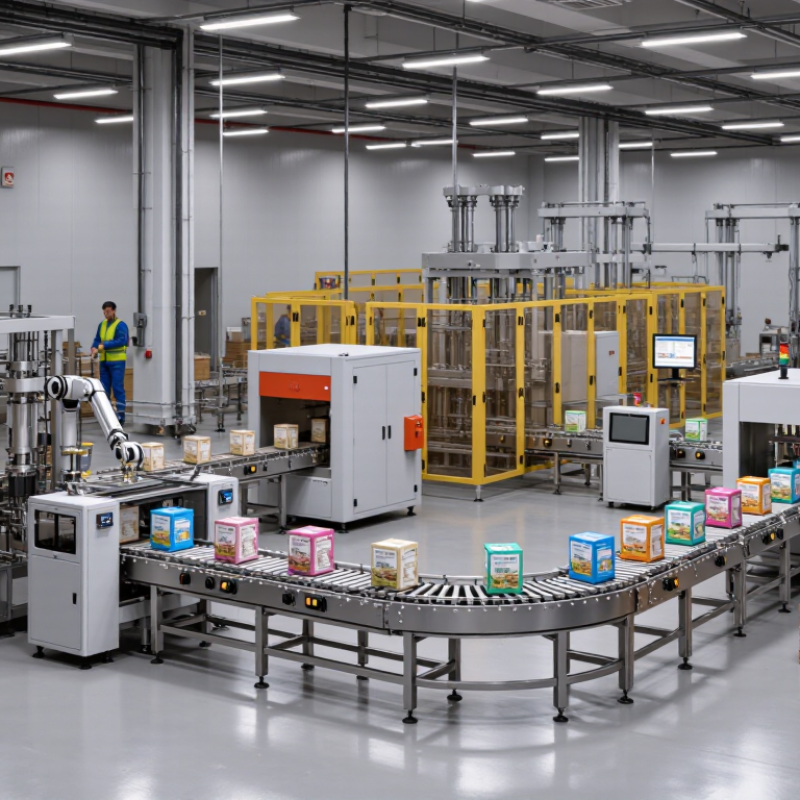
Packaging line speed is the quantity of acceptable products produced per minute. It is not the machine’s advertised maximum. A reliable measure uses good units divided by actual operating time. Rejects, stoppages, and slow changeovers must remain visible.
The real limit is usually the weakest process. Product feeding, sealing temperature, film tension, case packing, and manual replenishment can restrict output. Accumulation conveyors may protect the line, but they can also hide short stops.
Vorne’s OEE Industry Standard identifies 85% OEE as world-class performance, while many operations remain near 60%. This gap often reflects small interruptions, not one dramatic failure.
Small losses matter. Packaging teams should record cycle time, micro-stops, changeover minutes, reject rates, and speed losses by shift. The 2024 State of Smart Manufacturing report surveyed 1,560 manufacturers and found that 95% planned to adopt AI or machine learning within five years. Data tools can expose patterns, but sensors do not fix poor settings. People still need to test causes carefully.
A practical speed trial raises output gradually. Watch seal quality, product spacing, motor load, and rejected packs. Stop when quality becomes unstable. Faster is not always better.
In my view, one overlooked limit is cleaning time. It can quietly erase the gains achieved during production. Teams should review the result against good units per labor hour, not speed alone.
2026 Best Ways to Increase Packaging Line Speed?
Measure Current Line Performance with Reliable Production Data
Before changing equipment, measure what the line actually does. Record units per minute, cycle time, downtime, changeover duration, and reject rate. Use synchronized timestamps from the filler, sealer, conveyor, and inspection points. A printed shift report may hide short stops. Ten seconds repeated every few minutes can remove more output than one visible breakdown. Compare planned speed with sustained good output, not the machine’s advertised maximum. Operators often notice hesitation before a dashboard shows it.
Tips: Create a baseline for at least five representative shifts. Separate planned stops from faults, material waits, cleaning, and quality holds. Check the counter against physical samples at the end of each shift. If two systems disagree, do not force the numbers to match. Find the cause. Measure product changes separately, because a line may run quickly on one format and poorly on another. Keep data definitions consistent across shifts.
Review the data with operators, maintenance staff, and quality personnel. Their observations can explain why a sensor records “running” while packs accumulate at a transfer point. Track the largest losses by minutes and frequency. Then test one controlled adjustment, such as reducing conveyor accumulation or improving changeover steps. Record the result under similar conditions. A faster setting is not automatically better if jams, damage, or rejects increase. Clean-looking averages can be misleading. Recheck them before approving a speed change.
Measure Current Line Performance with Reliable Production Data
The chart compares actual packaging throughput with the planned production rate across an eight-hour shift. Tracking cartons per minute by hour helps identify speed losses caused by changeovers, minor stops, material replenishment, and quality checks before line-speed improvements are introduced.
Optimize Equipment, Materials, and Workflow for Higher Throughput
Higher throughput rarely comes from pushing every machine harder. In my line audits, the largest gains came from removing small delays between machines. Measure actual cycle time, stoppages, changeover minutes, and rejected packs at each station. Use an hourly tracking board, then verify entries against production records. A fast filler cannot compensate for a slow case packer. Balance the line around the true bottleneck, not its rated speed.
Inspect conveyors, sensors, sealing jaws, and dosing systems under normal operating conditions. Worn guides can create crooked packs and repeated stops. Set maintenance intervals from failure history, not assumptions. Materials matter equally. Consistent film thickness, carton dimensions, and moisture levels reduce jams and sealing variation. Trial every material change during a controlled run. We once increased speed too quickly and created more waste than output. The lesson was useful, but expensive.
Tips: Increase speed in small steps. Record results after each adjustment. Keep changeover tools near the line. Train operators to identify early warning signs, such as unusual vibration, loose seals, or uneven product flow. Review workflow weekly. Remove unnecessary walking and waiting. Do not ignore safety checks or quality controls. A slightly slower line may be better than an unstable one.
Packaging lines rarely lose speed because of one dramatic failure. Small delays matter. A sensor pauses the conveyor, an operator waits for approval, and a minor jam repeats every hour. In line assessments, I look at cycle time, changeover duration, stoppage frequency, and rejected packs before recommending upgrades. These measurements reveal where speed is truly lost.
Automation can reduce repetitive handling and maintain consistent product flow. Automatic feeding, synchronized conveyors, and robotic case packing help operators avoid unnecessary movements. The gains depend on proper setup. Poorly calibrated sensors may create faster stoppages, not faster production. Predictive maintenance adds another layer of control. Vibration readings, motor temperature, and unusual current patterns can signal wear before a bearing fails. Maintenance teams can then schedule repairs during planned downtime.
Smart line controls connect equipment data with practical decisions. A clear dashboard should show current speed, micro-stops, fault history, and quality losses without overwhelming operators. Recipes can also store approved settings for different package sizes, reducing changeover mistakes. However, automation is not a complete solution. One project focused heavily on machine speed and overlooked manual film adjustments. The line improved, but not as much as expected. Operators still need training, authority to stop unsafe equipment, and time to question unreliable data. Stable processes come before aggressive speed targets.
Faster packaging lines begin with measured changes, not rushed adjustments. Record current output, downtime, changeover time, reject rates, and operator observations. A short video can reveal pauses that production reports miss. Test one change at a time, such as feeder timing, conveyor spacing, or inspection settings. Keep the test window long enough to expose jams, overheating, and quality drift.
Safety checks must remain part of every speed trial. Confirm guarding, emergency stops, sensors, access points, and lockout procedures before increasing machine speed. Ask operators to describe new risks in their own words. Their practical experience often identifies hazards that technical reviews overlook. Never treat a clean first run as proof. Some faults appear only after several hours, when heat, fatigue, or material variation affects performance.
Use a controlled trial with clear pass and fail criteria. Track units per minute, defects, stoppages, noise, and near misses. Compare results against the original baseline, not personal impressions. An independent maintenance or safety review can strengthen the evidence. We have seen improvements disappear after a minor material change, so monitoring should continue across different shifts and batches. Leave room for doubt. A small speed gain may not justify higher waste, stress, or maintenance demand. Record those trade-offs before approving a permanent setting.
Measure acceptable products per minute during actual operating time. Exclude rejects from the good-unit count. Do not trust advertised machine speed alone.
Short stops, rejects, slow changeovers, material waits, cleaning, and quality holds all reduce output. Ten-second interruptions can quietly remove many packs.
Record at least five representative shifts. Track units per minute, cycle time, downtime, changeover time, and reject rate.
They connect events across filling, sealing, conveying, and inspection points. Without them, a brief transfer jam may look like normal running.
Ask operators about hesitation, product spacing, and recurring jams. Their observations may reveal problems before dashboards do.
It may be feeding, sealing temperature, film tension, case packing, or manual replenishment. The slowest process often limits total output.
Increase speed gradually and observe seal quality, spacing, motor load, and rejects. Stop when quality becomes unstable. Faster is not always better.
Compare good units per labor hour, not speed alone. Review jams, damage, rejects, and cleaning time. Some gains may disappear later.
Do not force different counters to match. Check physical samples, timestamps, and machine settings. The explanation may be imperfect.
No. Data can expose patterns, but people must test causes and adjust settings carefully. A clean dashboard can still mislead.
Increasing packaging line speed begins with understanding how throughput is measured and identifying the limits that restrict performance, such as equipment capacity, changeover time, material flow, labor coordination, and unplanned downtime. Reliable production data should be used to evaluate cycle times, stoppages, waste, and overall equipment effectiveness. This creates a clear baseline and helps teams focus on the improvements with the greatest impact.
To determine how to increase production speed in packaging lines, companies can optimize machine settings, improve material quality and supply, simplify workflows, and reduce unnecessary handling. Automation can support consistent operations, while predictive maintenance and smart line controls help prevent unexpected interruptions. Every adjustment should be tested carefully to confirm productivity gains without reducing product quality or worker safety. Ongoing monitoring, regular safety checks, and performance reviews ensure that higher speed is stable, efficient, and sustainable over time.

Switara Packing