How to Integrate Thermoforming into Automated Production?

Time:2026-10-24 Author:Henry
0%

Thermoforming is moving beyond isolated presses and manual trimming. Today, manufacturers connect heating, forming, cooling, trimming, inspection, and packaging into one controlled workflow. The challenge is not simply adding robots. It is designing reliable handoffs between every station.

The International Federation of Robotics reported 541,302 industrial robots installed worldwide in 2023. Deloitte’s 2023 Smart Manufacturing and Operations Survey found that 86% of manufacturers expect smart manufacturing to become a primary competitiveness driver within five years. These figures show strong momentum. They do not guarantee successful integration.

For companies asking how to integrate thermoforming with automated production lines, the practical answer begins with process mapping. Measure sheet temperature, cycle time, mold changeover, scrap, and operator movement. Then define where sensors, robots, conveyors, and vision systems create measurable value. A robot cannot correct unstable material heating. Automation exposes weak processes quickly.

Stefan Engleder, former CEO of ENGEL, captured this shift clearly: “Automation is no longer a question of whether, but of how.” His statement reflects a broader industry reality. Integration must connect equipment, data, people, and maintenance planning. It should also leave room for manual intervention when unusual parts appear.

That last point is often overlooked. Perfect automation is not always practical. A flexible line, with clear alarms and safe access, may outperform a rigid system. PMMI reports consistently identify labor availability, uptime, and operational efficiency as major packaging priorities. Thermoforming projects should therefore begin with evidence, not assumptions, and improve through measured trials.
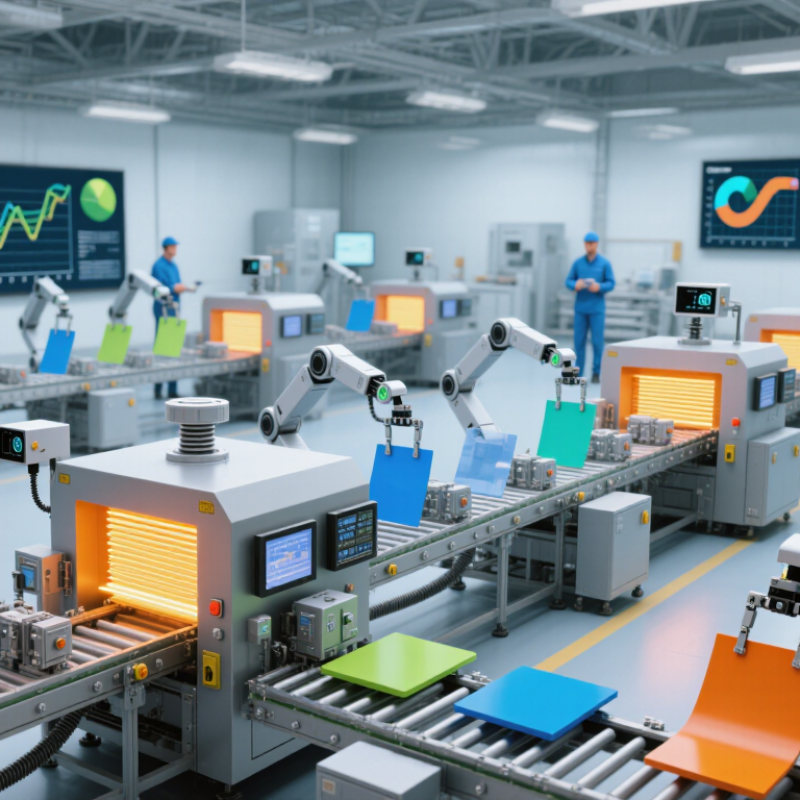
How to Integrate Thermoforming into Automated Production?

Define Thermoforming Requirements for Automated Production

Before integrating thermoforming, define product and process requirements in measurable terms. Record part length, width, depth, wall thickness, draft angles, and acceptable dimensional variation. Specify the sheet material, thickness range, forming temperature window, heating method, and cooling limits. Guessing is costly. A production trial should confirm shrinkage, warpage, and surface marks under repeatable conditions. In my experience, drawings alone rarely reveal how a thin corner behaves after cooling.

Automation requirements must describe the complete handoff, not only the forming press. State the target cycle time, loading direction, tool-change method, robotic reach, gripping points, and permitted part deflection. Define how sheets arrive, formed parts exit, and scrap is collected. Include sensors for sheet presence, temperature, mold position, vacuum pressure, and ejection confirmation. Keep tolerances realistic. A 0.2-millimeter requirement may be unnecessary for packaging but essential for a fitted assembly. Ask maintenance teams to review access around heaters, molds, cutters, and guarding before equipment is designed.

Quality criteria should include first-piece approval, in-process sampling, fit testing, and traceable records. Set alarm limits and specify what happens after a failed cycle. Stopping the line may protect quality, but it can create uneven cooling and material waste. That trade-off needs testing. Do not ignore changeover time; a technically fast cell can remain inefficient when operators need awkward adjustments. A pilot run with production-grade sheets, tools, and handling fixtures will expose weak assumptions early. Some requirements will change. Document why, rather than hiding the revision.

Select Equipment and Design an Automation-Compatible Workflow

Automating thermoforming starts with equipment compatibility, not a robot purchase. Select a forming machine with programmable heater zones, servo-controlled sheet feeding, and repeatable mold pressure. These features stabilize thin-wall parts and reduce manual adjustments. Add an automatic trim press, vacuum detection, and robot unloading when cycle timing supports them. The International Federation of Robotics reported 541,302 new industrial robots installed worldwide in 2023. That figure signals strong automation momentum, but it does not guarantee a suitable workflow.

Map the process around takt time, material movement, and changeovers. A practical cell may include sheet loading, preheating, forming, trimming, inspection, and palletizing. Keep short buffers between thermal and cutting operations. They absorb small delays without hiding major problems. Vision inspection should check flange edges, wall deformation, and incomplete forming before packing. According to Deloitte’s 2023 Smart Manufacturing survey, 86% of manufacturers expected smart operations to become a major competitiveness driver within five years. Connect machine data to production records, but avoid collecting data without a response plan.

Test the cell with real resin batches and realistic operator interruptions. A spreadsheet may predict a smooth 18-second cycle. The first trial often proves otherwise. I would leave access space around molds and trim tooling, even when floor space feels scarce. Changeovers, cleaning, and fault recovery usually expose weak designs. PMMI industry research consistently identifies labor availability and operational efficiency as major automation concerns, so training and clear recovery instructions belong in the workflow, not after installation.

Integrate Material Handling, Heating, Forming, and Trimming

How to Integrate Thermoforming into Automated Production?

Integrating thermoforming starts with a controlled material path. Sheets should move from storage to the heating station without scratches, dust, or unnecessary delays. Use sensors to confirm sheet presence, alignment, and temperature. A reliable handling system reduces manual adjustment and keeps cycle times consistent. Keep it stable.

Heating must match the material, thickness, and forming depth. Infrared zones can be adjusted independently, allowing operators to correct uneven heat patterns. However, temperature readings alone may not reveal weak corners or thin areas. Practical trials should include visual checks, thickness measurements, and records from several production cycles. Small faults matter.

The forming station should coordinate sheet positioning, mold movement, vacuum or pressure, and cooling time. After forming, automated trimming can use guided tools or programmable cutting paths. Remove finished parts carefully, then separate reusable scrap from production waste. Sensors can detect incomplete forming or poor trimming before parts reach packaging. The system is rarely perfect. For this reason, review rejected parts every shift and adjust one variable at a time. Faster automation is not always better if it hides defects. A balanced line connects handling, heating, forming, and trimming while leaving enough access for inspection and maintenance.

Connect Controls, Inspection, and Data Systems

Automated thermoforming works best when controls, inspection, and production data share one language. The forming press should record temperature, pressure, cycle time, and material lot at each cycle. Inspection systems can then connect wall thickness, trim accuracy, and surface defects to those process conditions. A rejected tray should reveal more than a red light.

The International Federation of Robotics reported 541,302 industrial robots were installed worldwide in 2023. That growth raises expectations for connected production, but robots alone do not create reliable quality. A practical system sends machine signals to a central data layer, while vision and measurement devices add product evidence. Operators need clear screens, not crowded dashboards. Keep alarms specific.

The 2024 Smart Manufacturing Survey from a leading industrial research group found that manufacturers continue increasing investment in digital tools, while integration skills remain a major challenge. Thermoforming teams should begin with a narrow, traceable workflow: monitor one forming station, verify one critical dimension, and compare results across shifts. Use consistent timestamps. Protect the data.

Perfect automation is unrealistic. Sensors drift. Operators miss checks. Even a well-designed model may flag acceptable variation. Engineers should review false rejects weekly and adjust limits carefully. The most useful system is not the one collecting every signal; it is the one helping people identify why a part changed.

How to Integrate Thermoforming into Automated Production?

Connect controls, inspection, and data systems to improve process visibility across heating, forming, trimming, and quality verification.

The chart shows representative automation coverage targets for key thermoforming production functions. Higher coverage indicates that more process data is captured automatically and made available for real-time control, inspection, and traceability.

Validate, Optimize, and Maintain the Automated Thermoforming Line

Automated thermoforming should be validated before it is optimized.

Begin with a controlled trial using one material grade, mold, and product geometry. Record sheet temperature, heating time, forming pressure, cooling time, and part weight. Check wall thickness at corners and deep draws. Small temperature differences can create visible defects.

The 2023 Smart Manufacturing and Operations Survey reported that 86% of manufacturers viewed smart manufacturing as a major competitiveness driver within five years. That supports investment, but it does not replace process evidence.

Optimization needs measurable targets.

Use statistical process control for thickness, dimensional accuracy, cycle time, and scrap rate. Connect sensors to a traceable production record, then compare shifts and material batches.

Energy monitoring also matters. The International Energy Agency reports that industry consumes about 37% of global final energy, making avoidable heating losses worth investigating.

A practical line review should examine:

  • heater zoning
  • idle time
  • compressed-air leakage
  • cooling efficiency

Do not optimize speed first. Faster cycles may hide unstable forming.

Maintenance should follow actual machine behavior.

Inspect heaters, thermocouples, vacuum paths, seals, molds, and conveyors at defined intervals. Keep photographs of wear patterns. They often reveal problems earlier than alarms.

Predictive alerts can help, but dashboards sometimes look cleaner than the process itself. That is an uncomfortable lesson.

Review rejected parts weekly, including failures that operators corrected manually. Then revise settings, training, or maintenance intervals.

ISO 22400 provides a useful framework for manufacturing performance indicators, though local conditions still require judgment.

FAQS

What product details should be defined before thermoforming automation?

Record part length, width, depth, wall thickness, draft angles, and acceptable dimensional variation. Measure everything.

Why are production trials necessary before final equipment design?

Trials reveal shrinkage, warpage, surface marks, and thin-corner behavior after cooling. Drawings rarely show every problem.

What should an automated handoff specification include?

Define loading direction, cycle time, tool changes, robot reach, gripping points, part deflection, and scrap collection.

Which sensors can improve process control?

Use sensors for sheet presence, temperature, mold position, vacuum pressure, and ejection confirmation. Missing feedback creates uncertainty.

How should quality control be organized?

Include first-piece approval, in-process sampling, fit testing, alarm limits, and traceable production records.

What happens after a failed forming cycle?

Define whether the line stops, rejects the part, or continues safely. Test this choice because cooling and waste may change.

Which equipment features support stable automated production?

Programmable heater zones, servo-controlled sheet feeding, repeatable mold pressure, vacuum detection, and automatic trimming can help.

Why should the workflow include buffers and operator access?

Short buffers absorb small delays between heating, forming, and cutting. Access supports cleaning, changeovers, and fault recovery.

How can a pilot run expose weak assumptions?

Use production-grade sheets, tools, fixtures, real material batches, and realistic interruptions. The planned cycle may fail.

Should every requirement remain fixed during development?

No. Some requirements will change after testing. Document the reason instead of hiding the revision.

Conclusion

Integrating thermoforming into automated production begins with clearly defining product requirements, material behavior, output targets, quality standards, and available floor space. The next step is to select equipment and create an automation-compatible workflow that coordinates material loading, heating, forming, cooling, trimming, and part removal. Each stage should be designed for stable handoffs, consistent cycle times, and safe operator access.

A reliable approach to how to integrate thermoforming with automated production lines also requires connected controls, inspection tools, and data systems. Sensors and monitoring functions can track temperature, pressure, timing, and part quality, while automated inspection helps identify defects early. Before full-scale operation, the line should be validated through controlled trials, then optimized for efficiency, repeatability, energy use, and material yield. Regular maintenance, performance reviews, and preventive replacement of wear components help preserve productivity and ensure long-term process stability.

Henry

Henry

Henry is a dedicated marketing professional with a profound expertise in the company's offerings. With years of experience in the industry, he possesses an impressive understanding of the market dynamics and consumer behaviors that drive success. Henry is committed to sharing his insights through......