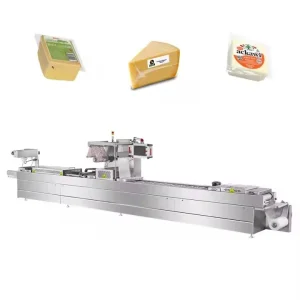
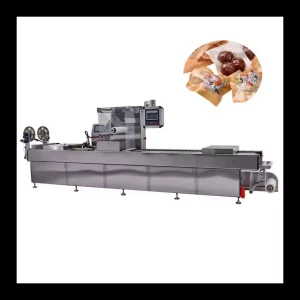
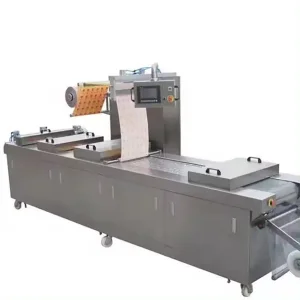
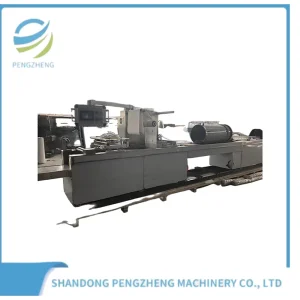
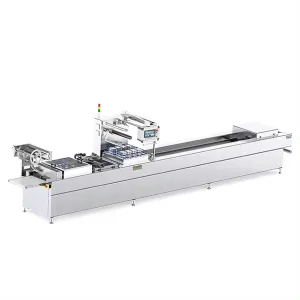
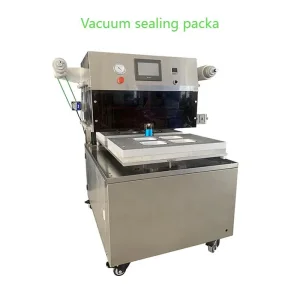
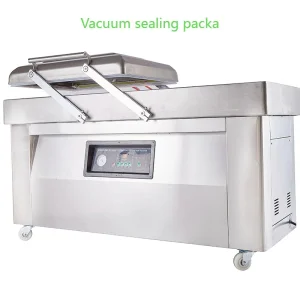
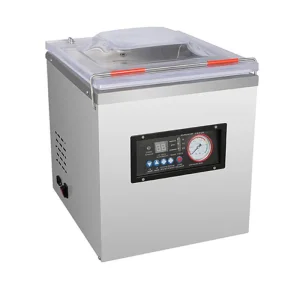
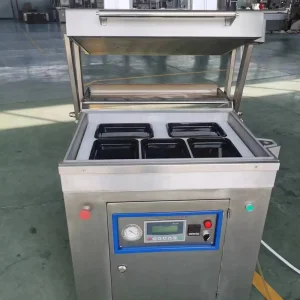
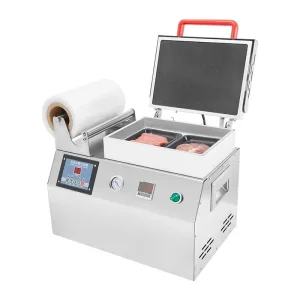
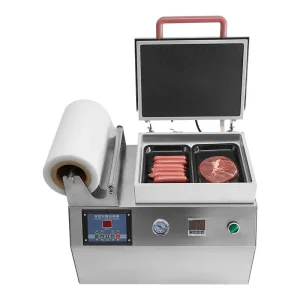
Engineered for high-barrier gas preservation and structural tray sealing across Namibian processing plants.
Namibia's industrial landscape is undergoing a massive transformation. Historically reliant on bulk, unprocessed exports of agricultural and marine goods, national initiatives are prioritizing "Growth at Home." This strategy emphasizes local value addition, shifting from exporting carcass-weight beef and raw fish to consumer-ready, portion-packaged retail items.
As a premier beef exporter to the European Union, China, and the United States, Namibian processing facilities in Windhoek, Okahandja, and Gobabis must adhere to extremely stringent food safety and packaging standards. Modified Atmosphere Packaging (MAP) thermoforming systems are the technological baseline for meeting these global regulations. By replacing ambient atmospheric air with a tailored gas mixture ($N_2, CO_2, O_2$), these automated systems prevent oxidation, control bacterial replication, and double or triple the product's microbial stability without preservatives.
"To scale exports to South Africa, the EU, and regional SADC markets, Namibian meat processors require advanced shelf-life extending technologies that maintain fresh texture and coloration during long-haul transport."
Thermoforming is the process of heating a plastic sheet (forming film) to its softening temperature, drawing it into a mold using vacuum and pressure, placing the food product into the formed pocket, and sealing it with a top web under specific gas conditions. When applied to Modified Atmosphere Packaging (MAP), the technical requirements scale exponentially:
Accurate replacement of normal air with optimized concentrations of Carbon Dioxide (for antibacterial effects), Nitrogen (filler gas to prevent collapse), and Oxygen (to preserve red meat color).
Utilizing high-barrier films (such as EVOH or PVDC layers) paired with multi-zone digital heat control to eliminate microscopic channels where gas could escape or oxygen could seep in.
Forming pockets with uniform wall thickness and structural ribbing. This is essential for protecting delicate seafood or heavy meat cuts from physical damage during shipping.
For Namibian factories operating in coastal areas like Walvis Bay, or arid highlands like Windhoek, the thermoforming machine must dynamically adapt to external environmental variables. Extreme differences in barometric pressure and relative humidity can degrade basic vacuum pumps. Our systems utilize heavy-duty Busch vacuum pumps combined with active pressure-compensating gas mixers to guarantee that the internal gas concentration remains stable, regardless of factory altitude or external humidity.
When purchasing industrial thermoforming packaging lines, capital efficiency and customization are the two primary drivers for operational success. Traditional European manufacturers charge premium margins with lead times stretching from 8 to 12 months. Chinese manufacturing, represented by Hangzhou Switara Packing Co., Ltd., offers a superior value proposition:
By combining high-end international components with Chinese manufacturing efficiencies, Namibian enterprises can achieve up to a 50% reduction in upfront capital expenditures while securing a machine engineered to last for decades.
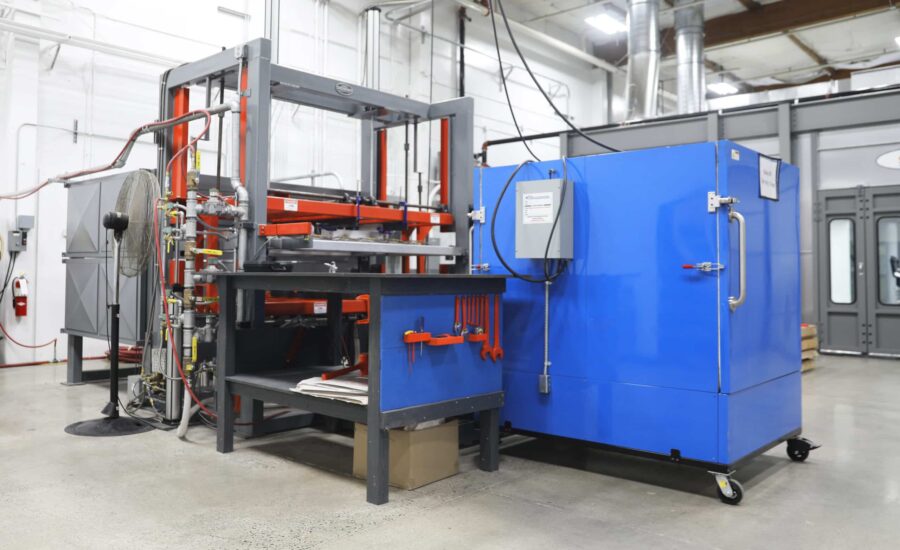
Hangzhou Switara's modern production workshop with automated manufacturing systems
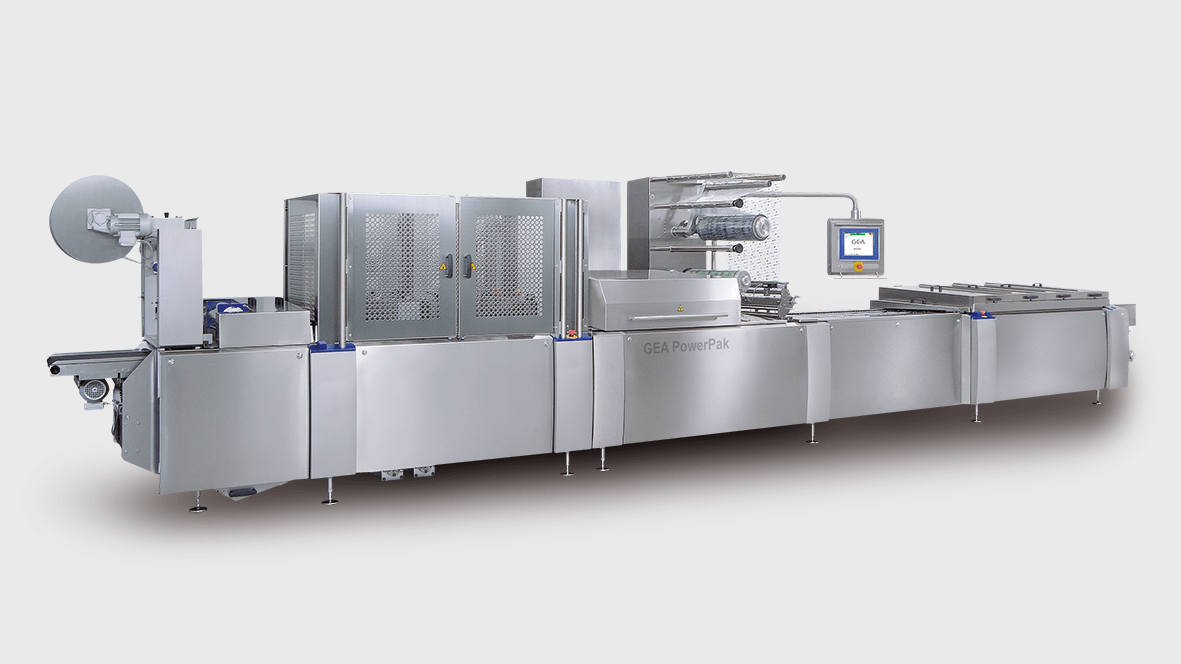
Hangzhou Switara Packing Co., Ltd. is a professional manufacturer specializing in thermoforming packaging machines and plastic forming automation solutions. Since its establishment, the company has focused on delivering advanced, reliable, and efficient packaging technologies for industries such as food, medical, electronics, and consumer goods. With a strong emphasis on innovation and engineering excellence, Switara has continuously evolved to meet the growing demands of global packaging markets.
In its early years, the company started as a small workshop dedicated to basic plastic forming equipment. Through consistent investment in research and development, Switara gradually expanded its capabilities, introducing semi-automatic thermoforming machines and improving production precision. As market demand increased, the company transitioned into fully automated thermoforming packaging systems, integrating modern control technologies and intelligent operation features.
Today, Switara continues to expand its global presence, committed to providing high-performance thermoforming packaging machinery and becoming a trusted partner for customers seeking efficient and scalable packaging automation solutions.
Adapting MAP configurations for Namibia's main agricultural and seafood export products.
For dried game meats, biltong, and fresh cuts, controlling the residual oxygen content is critical. Our machines pull vacuum down to 1 mbar and backfill with pure Nitrogen ($N_2$) to prevent rancidity and mold growth without compromising the texture or drying quality.
Fresh Cape Hake fillets and other white fish require a high concentration of Carbon Dioxide ($CO_2$) to inhibit aerobic bacteria, balanced with Nitrogen ($N_2$) to prevent pack collapse. Our custom mold thermoformers ensure rigid tray structures that protect tender fillets from bruising.
For Namibian dairy plants in the Gobabis area, vacuum packaging and gas flushing keep cheese blocks and slices fresh. Our customized molds feature clean, multi-lane cutting arrays for efficient retail packaging.
The global packaging industry is moving toward sustainability and digital integration. As Namibia looks to implement greener trade practices and comply with international eco-regulations, several key trends are shaping the future of thermoforming technology:
1. Eco-friendly Monolithic Films: Traditional multi-layer non-recyclable plastic films are being replaced by single-material barrier films (such as mono-PP or mono-PET). Our newest thermoforming systems feature specialized sealing bars and heat-sealing profiles to handle these sensitive, eco-friendly materials without reducing throughput.
2. Smart Gas Tracking & Diagnostics: Modern thermoforming machines now include real-time oxygen analyzers directly integrated into the sealing chamber. If the residual oxygen rises above the set threshold (e.g., 0.5%), the machine alerts operators, preventing defective batches from reaching the cold chain.
3. Remote Maintenance & Cloud Support: For factories in Namibia, quick access to technical support is essential. Switara integrates IoT-enabled Ethernet/Wi-Fi gateways directly into our PLC panels. This allows our design engineers in China to remotely diagnose errors, update software, and support local technicians, keeping downtime to a minimum.
4. Reduced Energy Consumption: Traditional thermoformers draw significant electrical power for heating elements and vacuum generation. Our latest models feature insulated heating plates and variable-frequency drives (VFDs) on vacuum systems, cutting energy use by up to 25% compared to older designs.
Direct technical answers for engineers and production directors planning procurement for Namibian packaging lines.
For fresh red beef, the industry standard is high-oxygen MAP, typically consisting of 70% to 80% Oxygen (to keep the myoglobin pigment bright red) and 20% to 30% Carbon Dioxide (to limit microbial growth). For dried meats like game biltong, a 100% Nitrogen gas flush is used to prevent fat oxidation and moisture retention.
Yes. Our industrial thermoforming systems are designed with high-efficiency cooling loops and heavy-duty electrical cabinet cooling. We use industrial chiller hookups and premium electrical components rated for harsh environments to ensure stable operation in arid regions like Windhoek or hot coastal sites like Walvis Bay.
We work closely with clients to design custom tooling. Using 3D CAD modeling and precise CNC milling of high-grade aluminum alloys, we can build custom molds for multi-cavity trays, skin packs, or specific compartment shapes. We also design tooling inserts that make changing between tray styles quick and easy.
We configure all export machines to match the local electrical grid. For Namibian industrial sites, we configure systems for 3-Phase 380V-415V at 50Hz. All wiring, circuit breakers, and control panels comply with CE and international standards.
Our machines include an integrated remote access module in the PLC system. This allows Switara engineers in China to log in securely to diagnose errors, update PLC software, or adjust parameters. For physical maintenance, we provide complete, labeled documentation and work with local engineering partners in Windhoek and Walvis Bay.
Explore our complete range of packaging technology, from manual tabletop sealers to fully integrated industrial lines.
Speak directly with our packaging engineers to discuss your custom tray dimensions, film materials, and throughput requirements.
 Switara Packing